Painted Rhythm Art Gallery

Why Horses Are So Popular in Indian Paintings

Have you ever wondered why horses are so popular in Indian households, offices, and galleries? may appear in the form of paintings, sculptures, murals, etc 

Whether it hangs in a minimalist office or a traditional bungalow, a painting of a horse has the power to draw attention. It reflects the beauty, history, and power associated with this noble creature.

Paintings have been used for centuries as a tool for communication. Even before there was a written word, people painted to tell stories, depict events, pass down cultural heritage, and express their feelings. One of the most popular subjects for painting was horses.

They were used in commerce, transportation, exploration, and wars. The horse has long been man’s most faithful companion and assistant. It could also be an indicator of the owner’s status and power; only the wealthy could afford to buy a horse. It is not surprising that the horse has been a popular subject of painting.

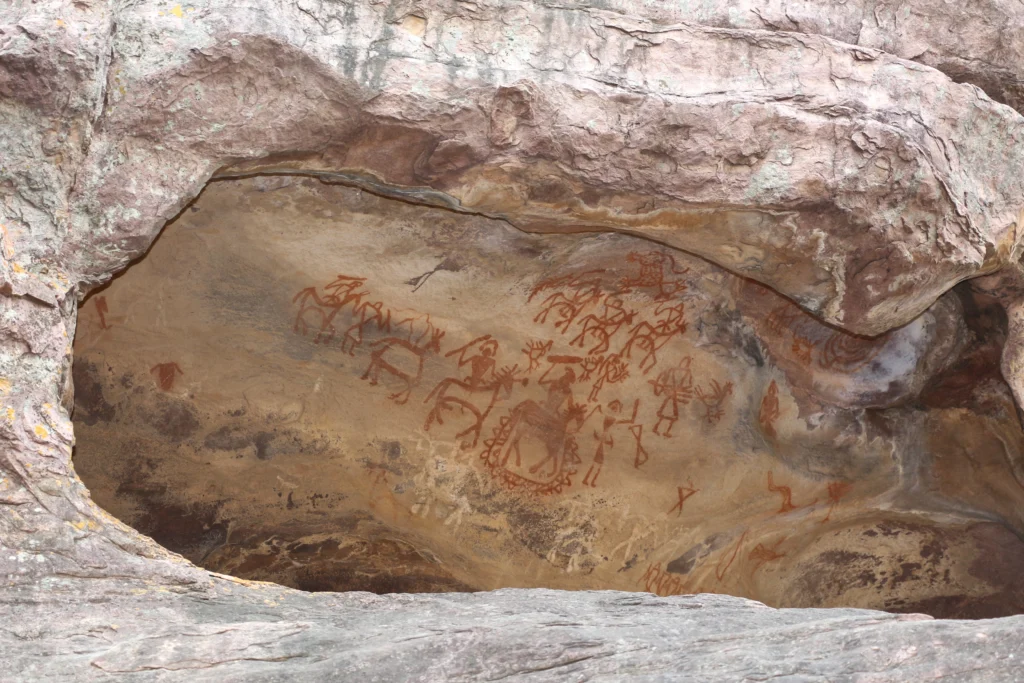
The Bhimbetka rock shelters are an archaeological site in central India that spans the Paleolithic, Mesolithic, and medieval periods. It is located 45 kilometers southeast of Bhopal and 9 kilometers from Obedullaganj city in the Raisen region of Madhya Pradesh. It displays evidence of the Stone Age beginning at the site in Acheulean times, as well as the first signs of human life in India. Bhimbetka translates to “Bhima”, the second brother of the five Pandavas in the Mahabharata, and “Baithaka”, which means seat or lounge, combine to form the compound term bhimbetka, which means “Bhima’s resting place” or “Bhima’s lounge”.

People have always associated horses with power, strength, self-confidence, and freedom. What better way to show these virtues than to paint or draw them? It is no surprise that many rulers and warriors depicted themselves and their horses in art, as the animals were an inseparable part of their lives.

One of the most famous Indian heroes is Maharana Pratap – a Rajput king and leader. He will always be remembered for his incredible courage and chivalry, as well as his beloved horse Chetak. According to the legends, it was Chetak who saved Maharana Pratap’s life during the Battle of Haldighati. There are also stories about Chetak’s amazing skills. He supposedly managed to fool the enemy by growing an elephant’s trunk and hid the wounded Maharana Pratap under his belly. These tales and many others told about the brave horse and the Rajput king are what people remember and depict in their paintings.

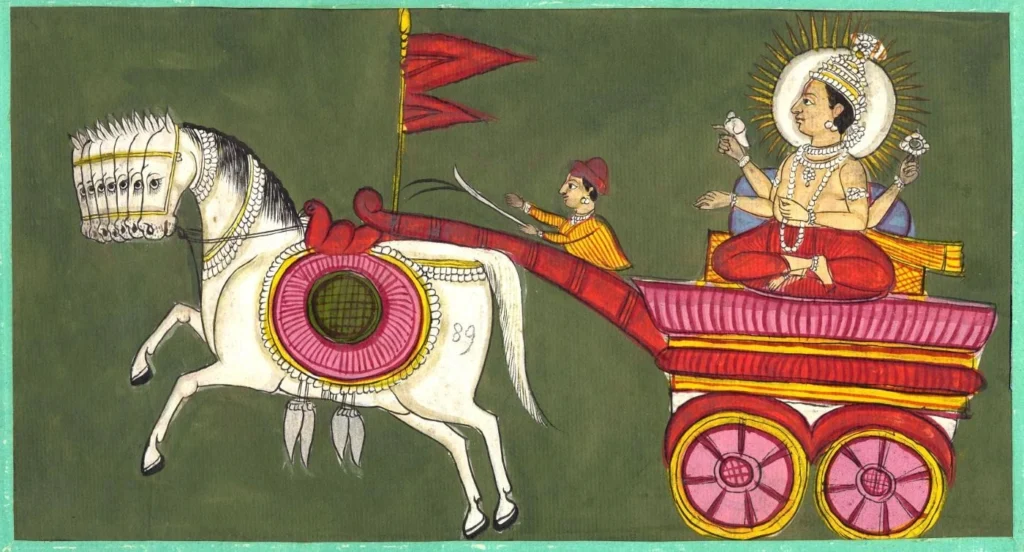
Horses play a significant role in Indian Grants. They have been a popular subject of painting and sculpture for centuries. For instance, the sun god Surya is often portrayed riding a chariot harnessed to seven horses. The seven horses pull the sun across the sky and make it shine over the world. The seven horses are often portrayed as the the seven colours of the Rainbow, the spectrum of sun rays which transform into seven colours, known as VIBGYOR (Violet, Indigo, Blue, Green, Yellow, Orange and Red). Some text also says that it represents the seven chakras of the body. The seven horses are named as Gayatri, Vrihati, Ushnih, Jayati, Trshtubh, Anushtubh, and Pankti.

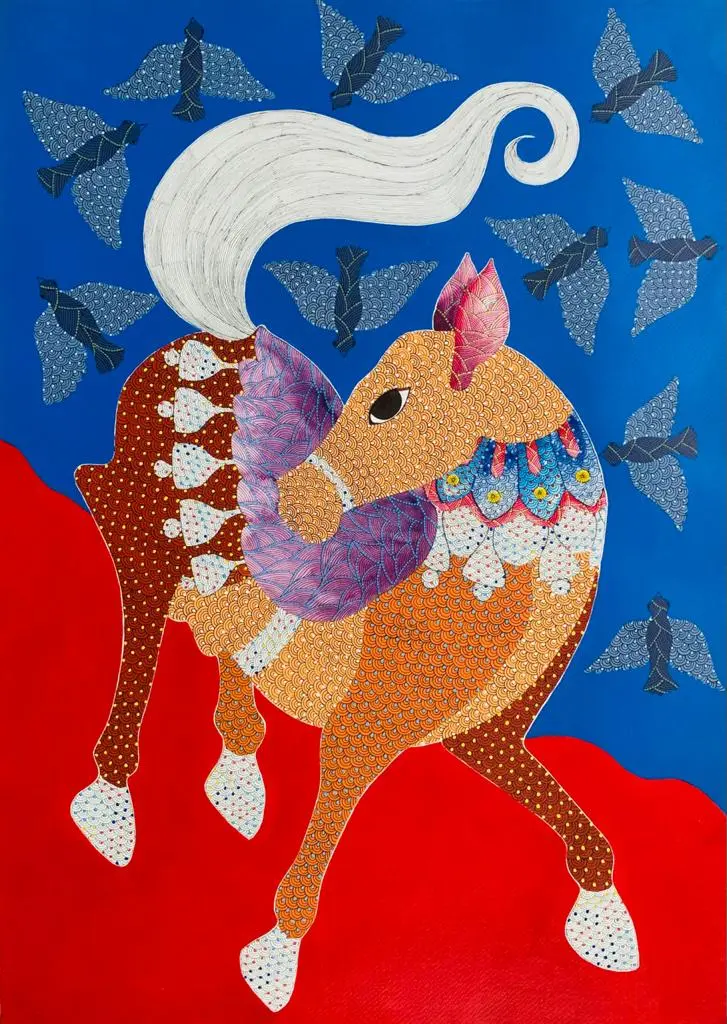
This is why Indians associate horses with prosperity and happiness, and positive changes. In Gond art, horses are often illustrated using patterns, dots, and flowing lines inspired by nature. Rather than focusing on realism, Gond artists infuse the horse with rhythm and life, making it appear deeply connected to the natural world.

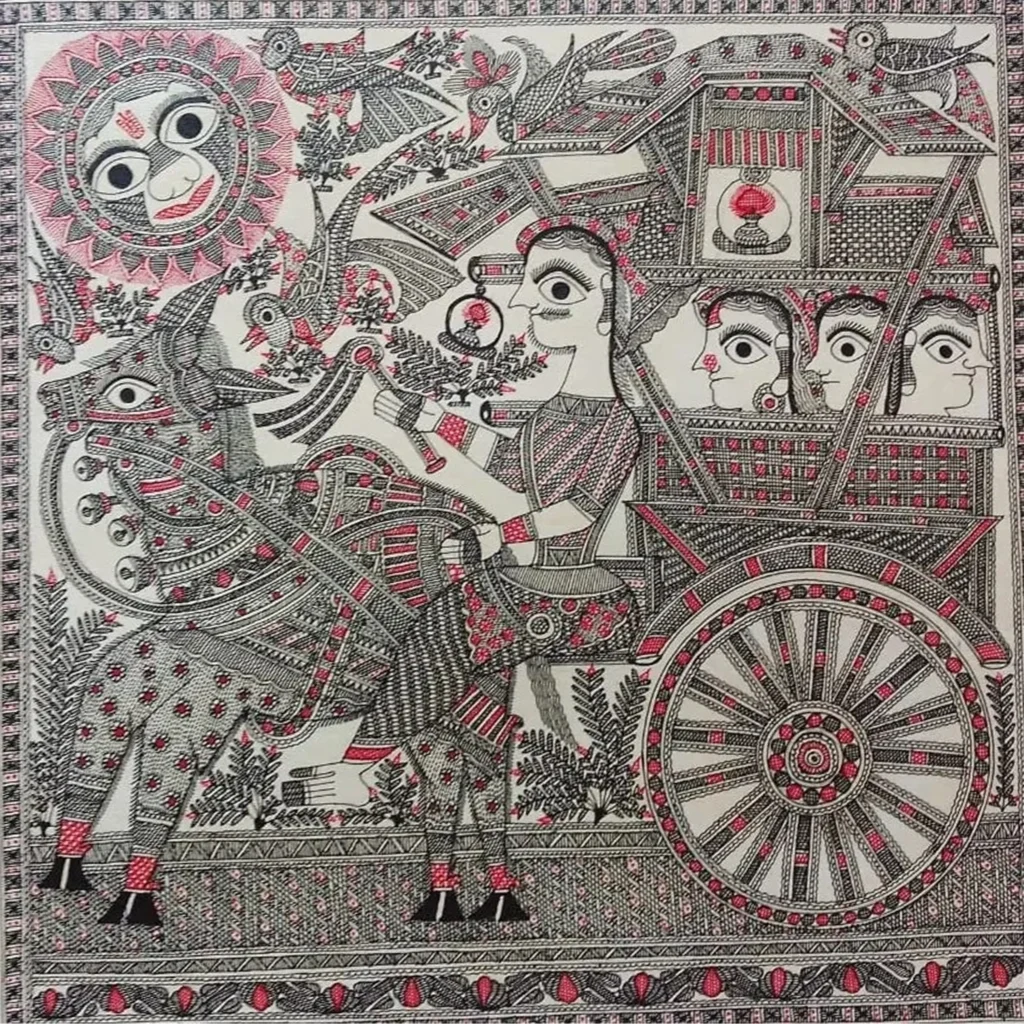
In Madhubani art, horses are portrayed using outlines, vibrant colours, and intricate geometric patterns. These paintings are rich in symbolism. Often depict horses as part of celebrations, rituals, and stories passed down through generations. Although the visual language differs greatly from Gond art, the essence remains remarkably similar—the horse continues to symbolize strength, prosperity and positive energy.

Other Indian folk traditions, such as Pattachitra, Phad and miniature paintings also feature horses prominently. Each region has developed its artistic style, colour palette and storytelling technique yet the horse consistently remains a powerful symbol. This shared appreciation across cultures is one of the reasons horse paintings continue to be loved throughout India.
Gond
Madhubani

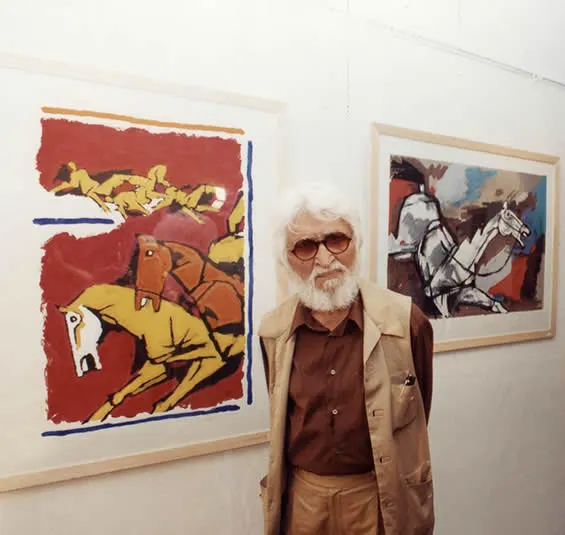
When it comes to modern Indian art, it would be impossible not to mention Mr. Maqbool Fida Husain, also very famously known as M. F. Husain. This famous master managed to capture the spirit of the horse and portray it in its true form. His Horse Series had become one of the most prominent in the collector’s market. Apart from painting, he was also a director. His bold and expressive strokes, vivid lines, and energetic motifs reflect the horse’s inner beauty. M. F. Husain showed that a horse can be strong, free-spirited, and fearless, and so beautiful and impressive. Such paintings inspire and evoke mixed emotions. 

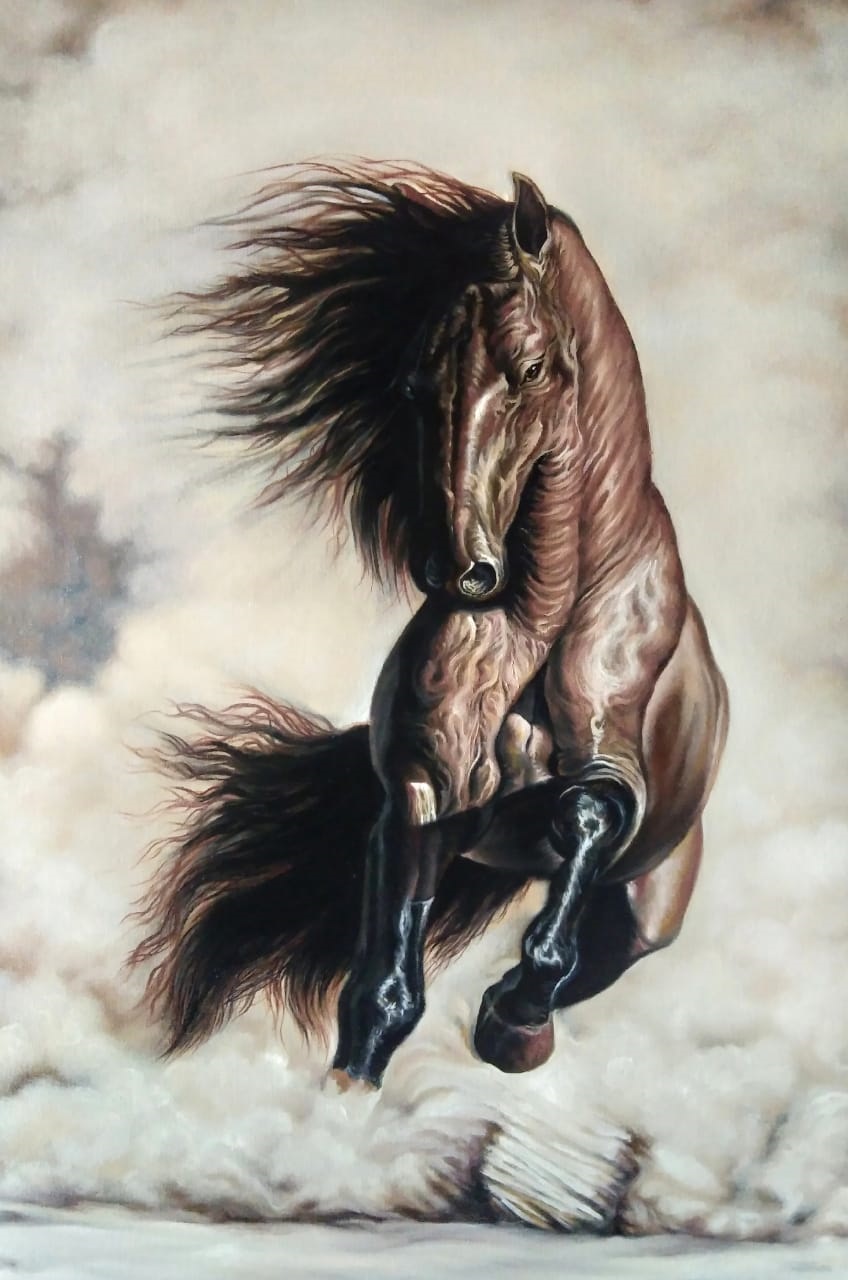
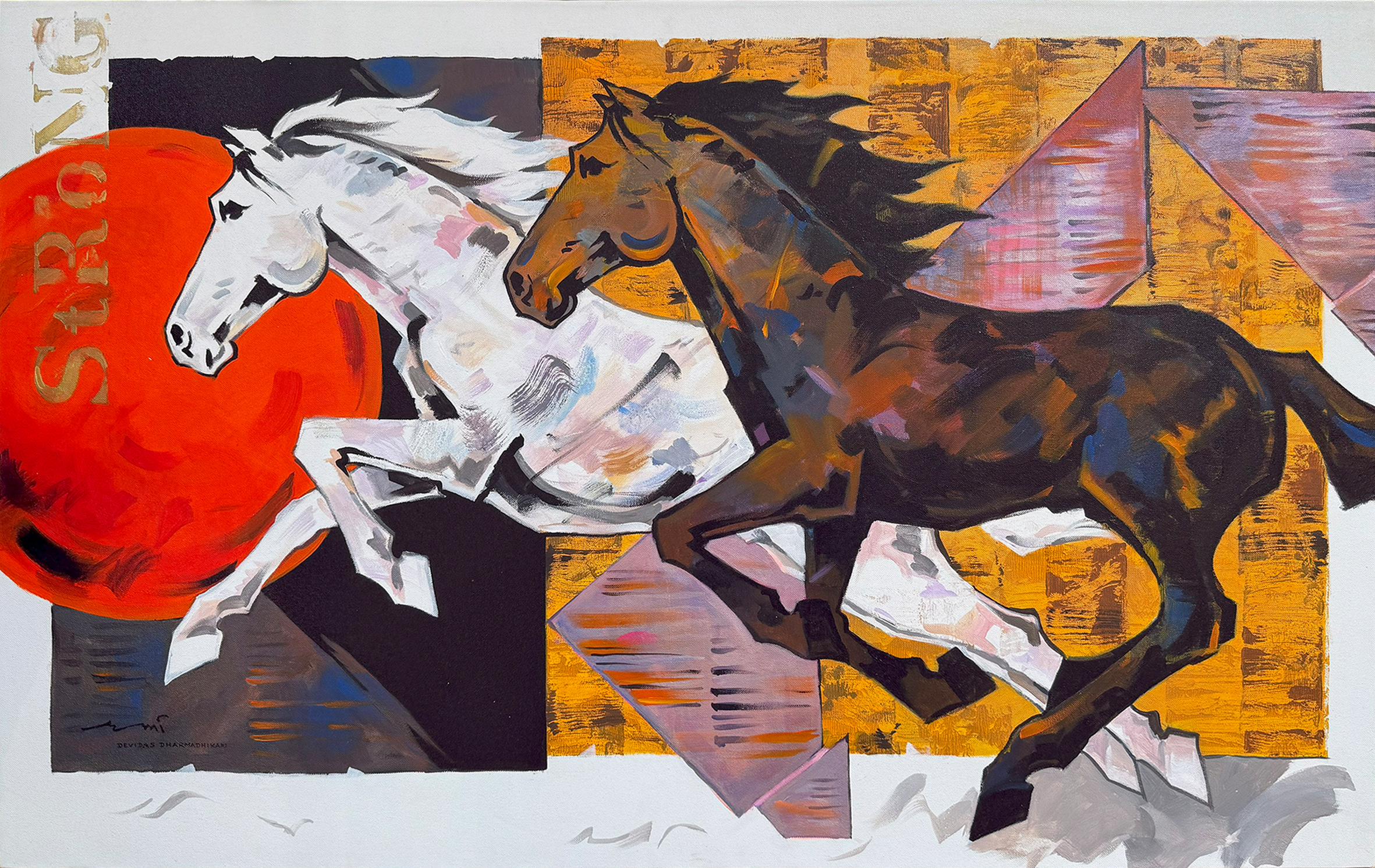
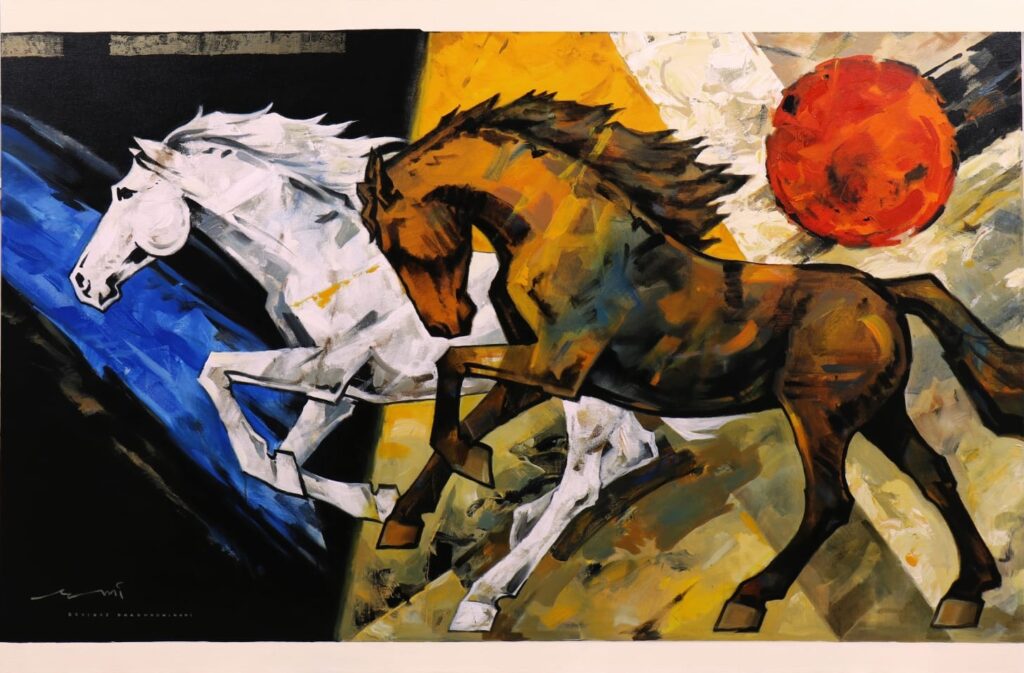
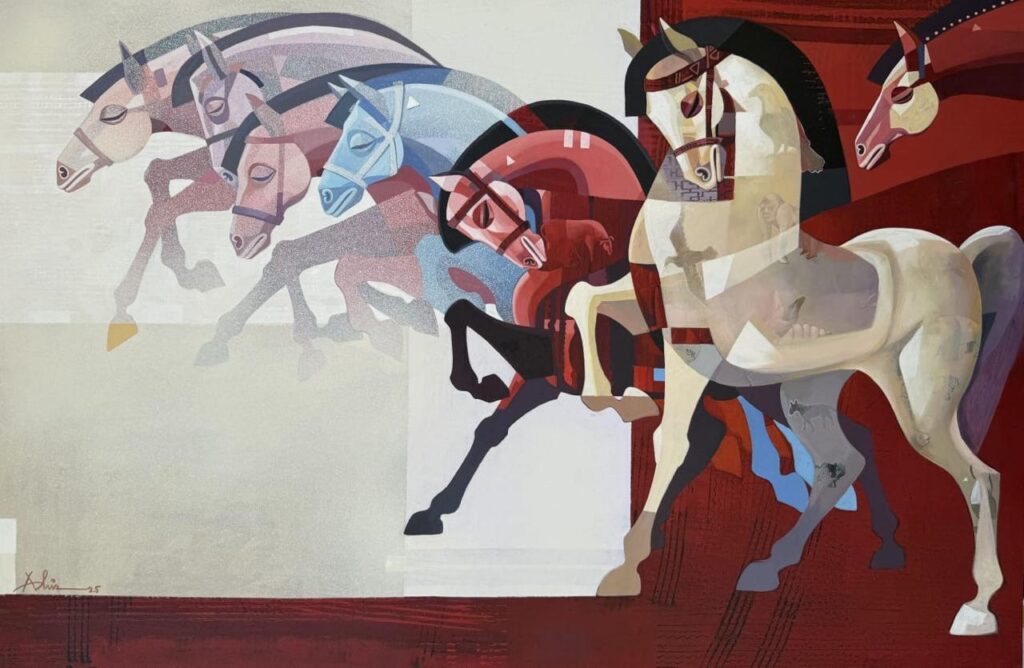
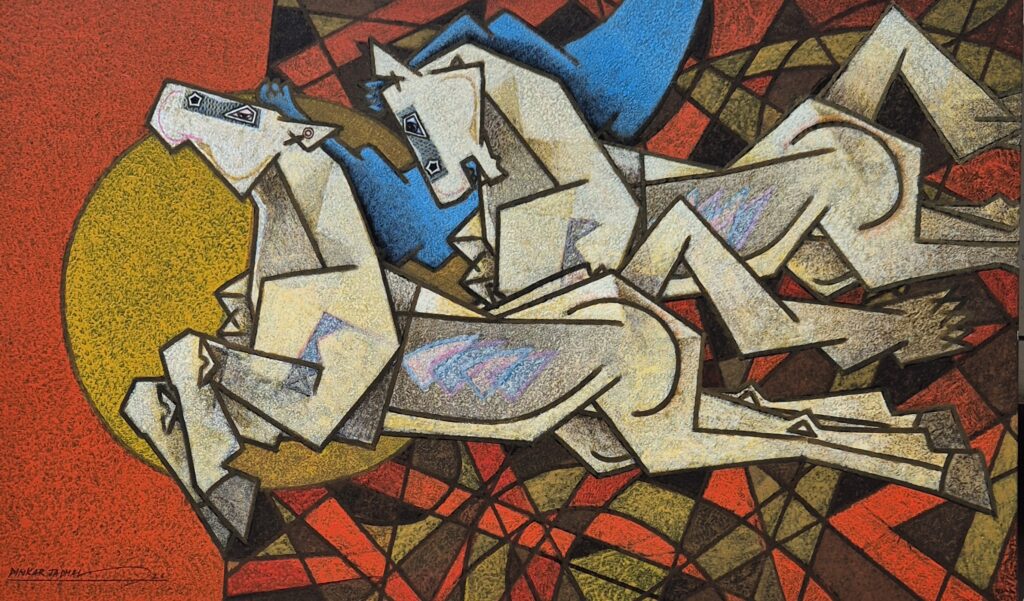
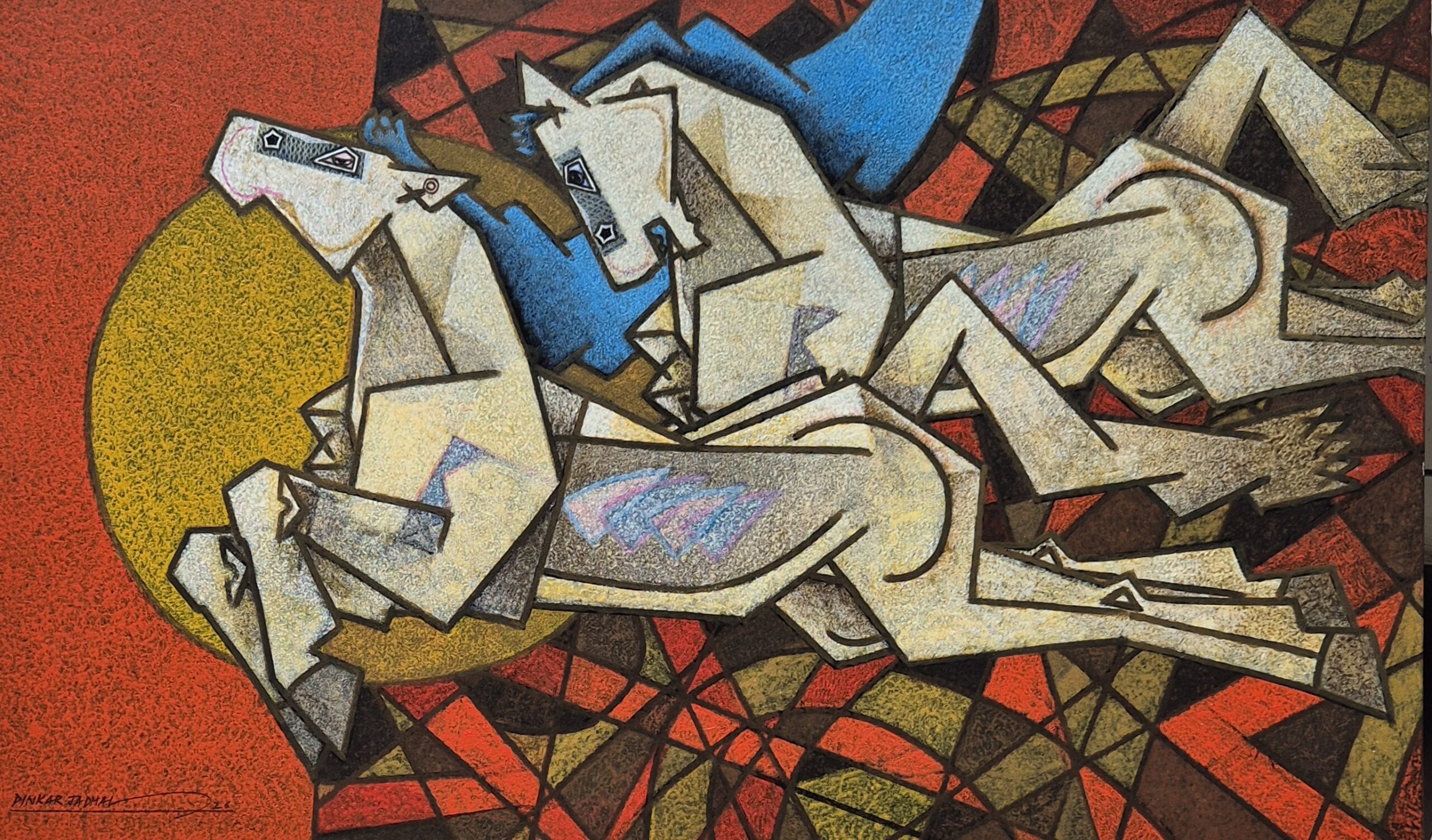
The beauty and significance of horse pictures have endured for centuries. People who love the noble animal find these paintings even more appealing over time. The horse is often painted in a way that reflects its natural habitat, historical role, and symbolic meanings. Whether it is a traditional or a contemporary painting, a piece of art with a horse in it continues to captivate people with its Royalty. Nowadays, when I think about horse paintings, there are a few artists whose works come to my mind immediately and whom I personally prefer, especially because they are bringing a fresh and contemporary perspective to the subject. Artists like Anand Sai, Dinkar Jadhav, Ashish Mondal and Devidas Dharmadhikari are some of the names that stand out to me. Each of them has a very distinct way of looking at the horse. Anand Sai’s works have a dramatic and almost surreal quality to them, where the horse feels more powerful and expressive than simply realistic. Dinkar Jadhav brings in a strong sense of geometry and abstraction, breaking the form of the horse into interesting shapes, lines and colours while still retaining its movement and character. Ashish Mondal takes a more contemporary approach, using layered forms, colours and multiple expressions of the horse to create a sense of motion, almost as if we are seeing the creature move through different moments at once. Devidas Dharmadhikari, on the other hand, captures the energy and spirit of the horse in a more dynamic and painterly manner, making the movement of the animal itself an important part of the artwork. There are many more artists whose work deserves to be explored, but these are the ones that come to the top of my mind whenever I think of contemporary horse paintings. What I find most fascinating is that although the subject remains the same, every artist gives it a completely different personality through their own style, whether it is surrealism, Indian contemporary art, geometry, abstraction or a more expressive approach. These artists, along with many other remarkable works, are available at Painted Rhythm Art Gallery, and exploring their paintings is another way of understanding how the timeless image of the horse continues to evolve even today.

Anand Sai
Devidas Dharmadhikari
Ashis Mondal
Dinkar Jadhav

Every brushstroke tells a story that can be hundreds or even thousands of years old. This is what makes these paintings so fascinating; they have a soul and a history of their own. Horses are not just a theme or character the artist chose to create, it’s the essence of that notable creature who lived alongside Men!

Product Enquiry

lingtogel77